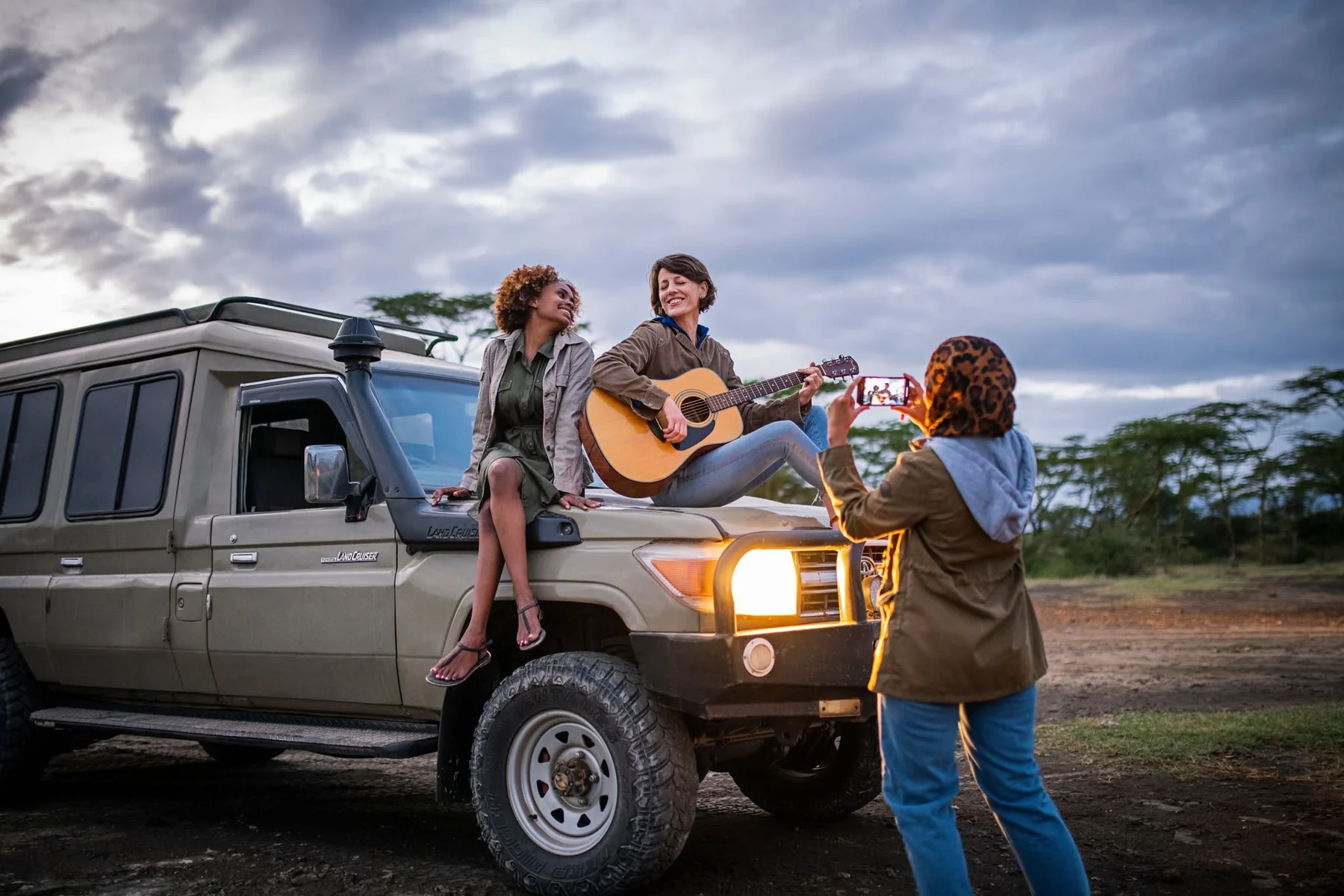
The private vs group safari decision changes the rhythm of your holiday as much as its price. A private vehicle can give your party more control over the day, while a shared departure can distribute road costs and introduce you to other travellers. The right choice depends on how you like to travel, who is coming with you and which services the quotation actually includes.
How shared safaris work
On a group departure, travellers generally follow an agreed route and schedule together. You may share the vehicle with people you have not met before, and the group needs to coordinate stops, departures and time at sightings. Confirm the maximum passenger number and seating arrangement. Also ask whether a minimum number of bookings is required, because a proposed departure is not the same as a confirmed departure.
How private road safaris work
A vehicle reserved for your party allows more discussion about early starts, picnic lunches and how long to spend watching a sighting. Families and photographers often value that flexibility. The route still depends on park hours, permits, road conditions and the guide’s judgement. Private does not mean unrestricted access, and it does not guarantee particular wildlife. Ask what can realistically change during the day and what must be fixed in advance.
Private vs group safari on a fly-in trip
A fly-in journey creates several separate sharing arrangements. Your room can be booked exclusively for your party while the flight and camp’s game drives are shared. A completely private game-drive vehicle may be available at an additional cost. Read each service separately rather than applying the word private to the whole trip. If exclusivity is central to the booking, ask the planner to list exactly where you will and will not share.
Private and shared safaris for your party
Solo travellers may enjoy a group’s company and shared costs, although single-room supplements need checking. Families may prefer a private vehicle that works around children’s routines. Couples can be happy in either format, depending on whether privacy or meeting people matters more. Friends should discuss expectations before booking: one person’s ideal full-day game drive can feel too long to another. A short conversation now can prevent friction on the road.
Private and shared safari value
A private budget safari and a shared luxury camp stay are different products, not steps on one simple ladder. Compare accommodation, vehicle time, guiding, meals and included activities. A smaller group may cost more per person because it shares fixed transport costs among fewer people. Ask for the same route in two formats if you are undecided. That shows the practical value of the upgrade instead of leaving you to guess.
Private and shared safari booking questions
Ask how many people can be in the vehicle, whether you keep the same guide, whether every guest has the agreed viewing position and what happens if a group departure is not confirmed. For camp-based trips, ask how game drives are allocated. For private trips, clarify the flexibility included in the quoted route. Get the answers in the proposal so that your expectations match the services being reserved.
Private and shared safari options at a glance
| Travel preference | Consider |
|---|---|
| Enjoy meeting other travellers | A confirmed shared departure with clear group limits |
| Want control over the daily pace | A private vehicle proposal |
| Travelling with young children | Private guiding plus camp age-policy checks |
| Flying between camps | Separate flight sharing from game-drive exclusivity |
| Watching the budget | Compare the same route in shared and private formats |
Private and shared safari routes to consider
Use these original itinerary outlines to start the conversation. Each route can be quoted for your dates, party size and preferred accommodation level; rooms, flights and departure arrangements need confirmation before booking.
- 3-Day Masai Mara Budget Group Safari
- 3-Day Masai Mara Private Safari
- 5-Day Northern Tanzania Private Safari
Private vs group safari: common questions
Does a private safari guarantee a private vehicle?
Only when the quotation explicitly includes one. Camp-run drives and scheduled flights may still be shared on a private holiday booking.
Is a group safari always cheaper?
Not in every comparison. Dates, accommodation and included services can outweigh the saving from sharing a vehicle. Compare equivalent itineraries.
More private and shared safari guidance
Private vs group safari: define the sharing arrangement
Break the trip into separate services: airport transfers, road transfers, flights, rooms, game drives and optional activities. Mark each one as private, shared or not yet confirmed. This simple exercise often reveals why two holidays carrying the same label have different prices. A room booked for two people says nothing about how many guests join their next game drive.
Next, decide which forms of sharing you actually enjoy. You may welcome conversation over dinner but prefer your own vehicle for photography. Alternatively, shared drives may be part of the appeal when travelling alone. Explain that distinction to the planner. A useful proposal describes the arrangement at every stage, rather than relying on private or group as a promise for the whole journey. It also identifies services that depend on availability or an additional charge.
Private vs group safari: flexibility during a wildlife day
A private vehicle can make it easier to agree an early start, pause for a bird sighting or return to camp when your party wants a break. However, flexibility still operates within the itinerary, access rules and practical limits. A distant camp cannot move closer to a sighting because the drive is private. Likewise, permits and park hours continue to shape the day.
On a shared drive, the guide balances several guests’ interests. That can introduce you to wildlife you might otherwise overlook. It also means you cannot assume the vehicle will spend every hour following your particular subject. Before booking, ask how the camp plans drives and meals. Then consider your own tolerance for compromise. The best travel format gives you a daily rhythm you will enjoy, rather than simply the most exclusive label available.
Private vs group safari: solo travel considerations
Solo travellers should separate the vehicle decision from the room decision. Sharing a safari vehicle does not necessarily remove a single-room supplement. A group departure may still price accommodation on a different basis from the transport. Therefore, request the full amount for one person in the room arrangement you actually want. Avoid comparing it with a per-person figure that assumes two sharing.
Ask whether the proposed departure is confirmed and what happens if the minimum group size is not reached. Also check whether your room remains single occupancy throughout or whether any sharing arrangement is expected. Travellers who value company may enjoy a small shared safari, while those with focused interests may prefer a private guide. Both can work. What matters is a clear service description and a realistic total, including any extra nights before or after the scheduled departure.
Private vs group safari: families and mixed-age parties
Families often value control over stopping, meals and time away from camp. A private vehicle can support that, especially when children have different energy levels. Nevertheless, vehicle exclusivity cannot remove long distances, room age limits or restrictions on particular activities. Discuss those needs before choosing the route. A gentle itinerary in one format may suit your family better than an ambitious circuit in another.
Friends and extended families should also discuss expectations together. One person may want long days watching predators, while another prefers a shorter drive and time at camp. Agree a shared outline before asking a guide to solve those differences on the road. If splitting activities is important, check whether the chosen property can accommodate it and what it would cost. The answer depends on actual staffing and vehicles, so it belongs in the proposal rather than an assumption.
Private vs group safari: photography and equipment
Photography can change how you use a vehicle. You may want room for a camera bag, time to work with changing light and fewer movements while taking a picture. Ask about the actual seating and how many people share the available viewing positions. A large vehicle description alone does not establish the space each photographer receives. Share any bulky equipment requirements before the booking is final.
In a group, keep equipment within your agreed space and respect other guests’ views. In a private vehicle, tell the guide which subjects interest you while allowing room for their judgement. Neither arrangement guarantees a sighting or a particular angle. Finally, consider whether you truly need exclusive driving every day. Some travellers prefer to spend that budget on an extra night instead. Comparing those two options can clarify what will improve your photographic holiday most.
Private vs group safari: comparing equivalent prices
Use the same dates, route, accommodation and number of travellers when comparing formats. Otherwise, a lower total may reflect a simpler camp or fewer nights rather than the benefit of sharing transport. Request an itemised explanation of the difference. This helps you see which cost buys exclusivity and which cost belongs to a different part of the holiday.
Also ask what happens when the party size changes. A private road trip for six friends divides transport costs differently from the same route for two people. However, a larger party may require a different room plan or vehicle arrangement. Do not assume the calculation remains linear. For a shared safari, confirm the maximum passenger number and any departure conditions. Compare the final party total, including room supplements and optional activities, before deciding which format offers the value you want.
Private vs group safari: responsible viewing in both formats
Every format depends on the rules of the protected area. Private guiding does not permit a vehicle to block animals, enter restricted terrain or ignore an instruction from park staff. Similarly, a group should never pressure its guide to compete with another vehicle for a closer position. Discuss your interests clearly, then leave practical wildlife decisions to the person responsible for the drive.
Responsible behaviour can improve the experience. Waiting quietly often gives everyone more time to observe natural movement and behaviour. Keep voices low and avoid feeding wildlife. If a sighting becomes crowded, accept a decision to move on. Ask how the selected camp or operator handles viewing etiquette before you book. Specific explanations are more helpful than a general responsible-tourism slogan, and they apply whether you share your vehicle with strangers or reserve it for your own party.
Private vs group safari: your booking decision
Choose three requirements you will not compromise on. These might be a private vehicle, a fixed departure date and a family room. Then identify preferences that can change, such as the room category or number of parks. This gives the planner a practical way to build an affordable proposal without guessing which parts matter most. It also makes alternatives easier to compare.
Before paying, read the final service list and check each sharing arrangement again. Confirm the vehicle, guide, flights, transfers and activities in writing. If an element remains subject to confirmation, understand when that decision happens and what alternative you will receive. The private vs group safari choice then becomes a clear agreement about your holiday. You can concentrate on the journey because the important expectations have already been discussed and recorded.
Private and shared safaris: prepare a useful enquiry
Start with the dates you can travel and the number of nights available. Add the number of guests, children’s ages where relevant and the room arrangement you need. Then explain the two or three priorities behind your interest in private vs group safari. A specific brief helps the planner compare workable options instead of guessing which features matter most.
If you have a budget range, say what it needs to cover. International flights, extra hotel nights and optional activities can change the total holiday spend. Also identify any essential requirement, such as exclusive vehicle use or a particular room layout. Ask for alternatives that explain the effect on your experience, not simply a list of different prices.
Before choosing, read the proposal from arrival to departure. Count the settled nights, check the longest travel day and confirm which services are shared. Keep the agreed itinerary and terms together. Clear answers at this stage make the next step easier and give you a practical basis for deciding whether the proposed safari fits your plans.
Private and shared safaris: official visitor resources
Use the relevant authority for current park information, access rules and travel requirements. These official resources complement the planning advice here; they do not confirm room availability, a commercial price or a wildlife sighting.
Reviewed on 19 October 2026. Seasonal descriptions are planning guidance, not a forecast for your departure. Charges, entry arrangements and operating conditions can change. Confirm the details that apply to your nationality, visitor category, dates and chosen activities before paying or travelling.
Compare your private vs group safari options
Send BookSafariTours your travel month, number of guests, children’s ages if relevant, preferred room arrangement and approximate budget. Mention the experiences you most want and the amount of time you would like on safari. Request an itemised proposal so you can compare the route, accommodation, transport and optional extras before deciding.